China Top 10 Adhesive Electrode Pad Manufacturers
China’s adhesive electrode pad industry is gaining attention as demand rises for TENS, EMS, ECG, and rehabilitation devices. Adhesive Electrode Pads connect clinical equipment with human skin, so their quality affects comfort, signal stability, and treatment consistency. Small details matter. A smooth hydrogel surface, flexible carbon film, and reliable snap connector can determine whether a pad remains usable after repeated movement.
Industry research supports this market direction. Grand View Research identifies home-use electrotherapy and portable medical devices as important growth areas. MarketsandMarkets also reports expanding demand for medical electrodes, supported by rehabilitation, chronic pain management, sports recovery, and remote care. These reports do not measure every Chinese manufacturer equally. Their definitions and sampling methods differ. That limitation deserves attention.
This “China Top 10 Adhesive Electrode Pad Manufacturers” overview therefore considers more than production volume. It examines material selection, hydrogel performance, electrode conductivity, customization capacity, quality systems, export experience, and technical documentation. ISO 13485 certification, applicable IEC 60601 requirements, biocompatibility evidence, and batch traceability are especially relevant for responsible sourcing. A polished website is not enough.
Manufacturers may offer silver chloride, carbon, or conductive-film structures. Each design serves different application needs. Buyers should compare peel strength, impedance, shelf life, skin compatibility, connector options, and packaging conditions. Supplier audits remain valuable. Samples can reveal what brochures hide.
No ranking is permanently objective. Prices, certifications, lead times, and product performance change. This guide offers a practical starting point, not a substitute for verification. Independent testing and documented communication still matter most.
Adhesive Electrode Pads: Definition, Structure, and Main Uses
Adhesive electrode pads are skin-contact interfaces that deliver or record electrical signals. They support ECG monitoring, TENS pain relief, NMES rehabilitation, and some clinical stimulation procedures. Grand View Research estimated the global electrotherapy market at approximately US$1.1 billion in 2023, showing steady demand for reliable disposable components.
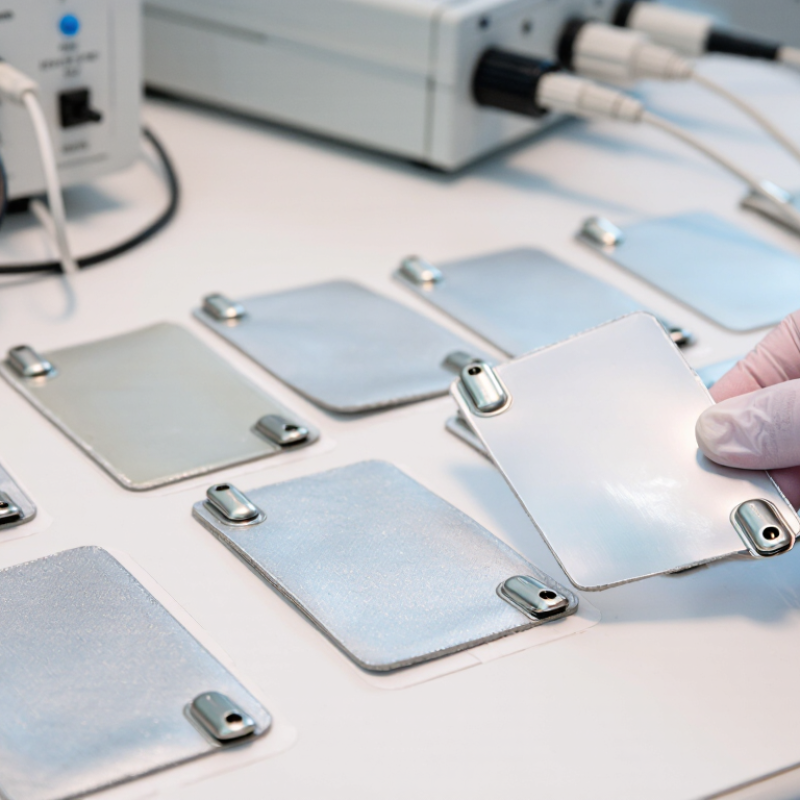
The structure is simple, but every layer matters. A flexible backing film holds the pad in shape. A conductive hydrogel maintains contact with the skin. A metalized electrode distributes current across the contact area. The lead connector transfers signals to monitoring or stimulation equipment. A release liner protects the gel before use.
In practical testing, uneven gel coverage can create hot spots, weak signals, or early detachment. Small details matter.
Adhesive performance depends on skin moisture, hair, movement, and storage conditions. IEC 60601-2-10 provides safety requirements for nerve and muscle stimulators, while clinical teams commonly inspect skin before and after application. The FDA’s medical-device guidance also emphasizes biocompatibility and controlled contact with skin.
A clean edge helps. A soft, breathable backing improves comfort during longer sessions. Yet, no pad performs equally on every patient. That limitation deserves more attention in supplier evaluations, especially when Chinese manufacturers compete on customized sizes, connector types, hydrogel formulas, and production volume.
Key Criteria for Evaluating Chinese Electrode Pad Manufacturers
Choosing among China’s top electrode pad manufacturers requires more than comparing online catalogs. Product quality begins with material selection, adhesive performance, and production discipline. Ask whether the supplier can explain its hydrogel formula, electrode conductivity, backing fabric, and skin-contact testing in clear technical language.
Request recent samples from different production batches. Check whether each pad stays attached during movement, peels away without excessive residue, and maintains stable contact after several uses. Test packaging seals, expiration labels, and storage conditions. Small details matter. A weak pouch seal can dry the hydrogel before the product reaches a clinic.
Reliable manufacturers should provide traceable batch records, inspection reports, and documented quality procedures. Look for controlled clean areas, calibrated testing equipment, and trained operators. Verify whether the factory can support required certifications and destination-market documentation, rather than simply displaying copied certificates. Ask how complaints are recorded and corrected. Fast replies are useful, but technical answers matter more.
Price deserves careful interpretation. An unusually low quotation may reflect thinner materials, shorter testing, or unstable supply chains. Compare total cost, including sampling, tooling, packaging changes, and rejected units. No supplier is perfect. During evaluation, unclear answers should be recorded, not ignored. A factory that admits a limitation and proposes a measurable correction may be more dependable than one promising flawless performance.
China’s Top 10 Adhesive Electrode Pad Manufacturers
China’s Top 10 Adhesive Electrode Pad Manufacturers operate within a growing medical consumables market. Grand View Research estimates the global medical electrodes market could expand at roughly 6% annually through 2030. Adhesive electrode pads support ECG, TENS, EMS, and rehabilitation equipment. Their value depends on more than low pricing.
Reliable manufacturers usually control hydrogel viscosity, conductive ink resistance, and peel strength. A pad should remain attached during movement but remove without excessive skin residue. In practical testing, evaluators often inspect adhesion after sweating, repeated flexing, and storage at changing temperatures. Small details matter. A curled edge can distort readings.
MarketsandMarkets reports continued demand for disposable monitoring components, driven by home healthcare and outpatient treatment. China’s leading suppliers commonly provide different shapes, connector types, and backing materials. They also perform batch sampling, biocompatibility checks, and shelf-life testing. However, supplier claims still require verification through independent documents and production audits. Some online specifications appear incomplete. That deserves caution.
A useful comparison should examine ISO 13485-based quality systems, traceability, customization capacity, and delivery consistency. Buyers should request test reports for skin irritation, electrical performance, and packaging integrity. Price remains important, but unstable gel performance can increase replacement costs. The strongest shortlist is not always the largest one. It is the one supported by repeatable evidence.
Product Types, Materials, and Customization Capabilities
China Top 10 Adhesive Electrode Pad Manufacturers
China’s adhesive electrode pad sector is expanding with home therapy and clinical monitoring. Grand View Research estimates the global medical electrodes market could reach about USD 2.4 billion by 2030. Its forecast suggests steady annual growth of roughly 6% from 2024 onward.
Product selection depends on application. TENS and EMS pads commonly use conductive hydrogel, carbon film, and soft nonwoven backings. ECG pads often require silver/silver chloride sensing surfaces. Defibrillation pads need larger contact areas and stable adhesion. Small round pads suit portable stimulators. Long rectangular pads can cover muscle groups more evenly.
Materials matter under real conditions. A hydrogel must stay moist inside its pouch. The liner should peel cleanly, without lifting the gel. Foam thickness affects comfort and pressure distribution. Custom manufacturers can adjust pad geometry, connector position, cable length, gel conductivity, adhesive strength, and package size. They can also support private labeling and controlled pilot runs.
According to MarketsandMarkets, the global wearable sensors market is projected to grow strongly through 2028, increasing demand for reliable skin-contact components. Still, customization is not automatically better. A stronger adhesive may cause discomfort after repeated use. A softer gel may reduce storage stability. Manufacturers should validate impedance, peel strength, aging, and skin tolerance through documented testing. Some specifications remain surprisingly easy to overlook.
This chart summarizes representative product categories, electrode/contact materials, and customization dimensions commonly specified for adhesive electrode pads. The values show the number of listed options in each category, not company rankings, market share, or sales data.
Quality Standards, Certifications, and Purchasing Considerations
China’s top 10 adhesive electrode pad manufacturers should be judged by evidence, not ranking claims. Quality begins with controlled materials, stable conductive gel, and clean converting processes. Look for ISO 13485 or ISO 9001 certification, but verify the certificate scope and expiry date. Some certificates cover factory systems, not every electrode pad. That detail is easy to miss.
Reliable manufacturers should provide test records for adhesion, electrical impedance, biocompatibility, aging, and package sealing. Ask for lot traceability from raw material to finished shipment. CE or other market-specific documentation may be necessary, depending on the destination and product classification. Request recent samples. Check whether the pad remains secure after movement, sweat exposure, and repeated handling. A glossy sample can hide weak production controls. I have seen purchasing teams focus too heavily on unit price. That often creates higher inspection and replacement costs later.
Tips: Compare at least three quotations, but compare specifications equally. Confirm adhesive type, electrode size, connector design, shelf life, packaging, MOQ, and lead time. Ask whether customization changes the validation records. Conduct a small trial order before signing a large contract. Keep written acceptance criteria. No checklist is perfect. Supplier audits, production photos, and independent testing can reveal gaps that certificates alone cannot show.
