50% Response rate
Sourcing Freeze Dried Fruits Powder in 2026 requires more than comparing prices. Buyers must examine fruit origin, drying conditions, particle size, moisture, water activity, and microbial results. A bright color can look impressive, yet it may hide weak storage controls. Small details matter.
Food-processing authority Peter Fellows has stated, “Food processing should preserve quality while making products safer and more convenient.” That principle fits freeze-dried fruit sourcing closely. A dependable supplier should explain its raw-material controls, drying temperature, packaging system, and batch traceability. Request a current Certificate of Analysis, pesticide documentation, allergen statement, and product specification before approval. Do not rely on a polished website alone.
Test samples in real applications. Mix the powder into yogurt, smoothies, bakery fillings, or nutrition products. Check flavor, color stability, solubility, grit, and aroma after storage. Ask whether the powder contains carriers, added sugar, or anti-caking agents. These ingredients can change label claims and production performance. Confirm carton strength and inner-bag protection, especially for humid shipping routes.
The cheapest offer may become expensive after caking, delayed delivery, or inconsistent batches. Still, no supplier is perfect. My own sourcing reviews have shown that an excellent sample does not guarantee reliable production. A factory visit, video audit, or independent laboratory test can reveal gaps. Build a shortlist, but keep questioning it. In 2026, the strongest sourcing decision will balance quality, transparency, resilience, and practical product performance.
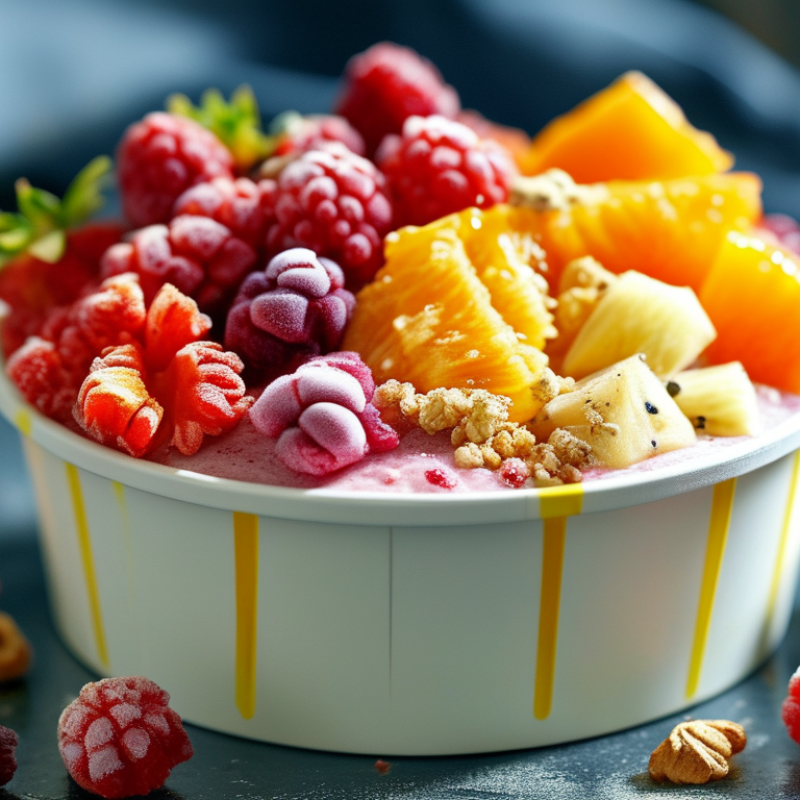
A strong 2026 sourcing brief starts with the fruit type, not the supplier catalogue. Mango, strawberry, banana, and blueberry powders behave differently during drying, milling, and storage. Define the cultivar, origin, harvest season, and permitted processing aids. FAOSTAT data show global fruit production exceeded 900 million tonnes in recent years, but supply volume does not guarantee consistent powder quality. Seasonal variation remains a real purchasing risk.
Purity needs a measurable definition. Request a specification for fruit content, carrier percentage, pesticide residues, heavy metals, allergens, and microbiological limits. Moisture should be agreed before sampling. Many applications perform well below 5%, but hygroscopic fruits may require tighter control. Water activity matters too. It predicts caking better than moisture alone. For mesh size, select a target such as 60, 80, or 100 mesh, then check the actual particle-size distribution. A powder can pass the average and still feel gritty. That detail is often missed.
Tips: Ask for three retained samples from different lots. Compare color, aroma, solubility, and sediment after 24 hours. Review the COA, process flow, and recent test dates. USDA FoodData Central shows that nutrient values can vary by raw fruit and processing conditions, so do not copy one laboratory result into every purchase order. A practical brief should include tolerances, packaging, shelf life, and storage temperature. I would also leave room for revision. Early specifications are rarely perfect.
Set measurable targets before requesting supplier quotations. For freeze-dried fruit powder, specify moisture at 5% maximum and water activity below 0.30. These limits can help reduce caking, quality loss, and microbial growth risks. However, they should match the fruit, particle size, and intended application.
Ask for recent batch records, not only a standard specification sheet. Request moisture results, water activity readings, testing dates, and sample identification. Water activity should be measured with a calibrated instrument, preferably at a controlled temperature near 25°C. Moisture results can vary by method, so ask whether the supplier uses oven drying, halogen analysis, or another validated procedure. The numbers need context.
Use a representative pre-shipment sample. Check its color, aroma, flow, and texture after opening. A powder that clumps in a dry room deserves questions. I have learned that a low moisture result can still mislead when sampling is poor or packaging has leaked. That weakness is easy to overlook.
Review the certificate of analysis against your own test results, then document any difference. Also inspect inner bags, seals, oxygen control, and storage conditions. A reliable supplier should explain corrective actions clearly when a batch exceeds 5% moisture or reaches 0.30 water activity. Supplier approval should remain conditional until repeated batches perform consistently.
A reliable audit begins with the supplier’s food safety plan, not a polished sales presentation. Request the current HACCP study or ISO 22000 certificate, including its scope, site address, and expiry date. If the facility uses a GFSI-certified system, verify the certification through the approved certification body. The certificate must cover fruit powder production, not only storage activities.
Ask to review hazard controls for pesticides, microbes, foreign materials, and undeclared allergens. Examine monitoring records from recent batches. Look for signatures, timestamps, corrective actions, and evidence of follow-up. Details matter. A missing verification record can reveal weak implementation.
For freeze dried fruit powder, inspect water activity results, sieve controls, metal detector checks, and packaging-room hygiene. Request a sample Certificate of Analysis and match it against the product specification. Traceability should work both ways. The supplier should identify raw fruit, processing dates, equipment, packaging materials, and distribution records within a practical timeframe.
Do not accept certificates blindly. During supplier assessments, paperwork may appear complete while floor practices remain inconsistent. Ask how employees handle damaged bags, cleaning failures, and temperature deviations. Their answers often expose operational maturity. I would also review complaint trends and recall exercises, although these records can be incomplete. That weakness deserves a documented corrective action, not a quick verbal promise. Reliability grows when the supplier welcomes difficult questions and proves improvement with dated evidence.
Sourcing freeze-dried fruit powder in 2026 starts with conversion yield, not the quoted powder price. A practical planning range is 8–15 kg of fresh fruit for 1 kg of powder. The exact ratio depends on water content, trimming, drying loss, and milling efficiency. USDA FoodData Central lists water levels near 91% for strawberries, 86% for apples, and 75% for bananas. Fruit choice changes the economics quickly.
That range is useful, but it is not a promise. A supplier should provide batch records showing fresh input weight, final powder weight, and rejected material. Ask for moisture and water activity results too. Freeze-dried powder can look abundant while carrying hidden process losses. I have seen buyers compare only the final kilogram price. That approach misses the expensive part.
Build pricing from the raw fruit first. If fresh fruit costs 0.80 dollars per kilogram, an 8–15 kilogram yield range creates 6.40–12.00 dollars in fruit cost alone. Add labor, freeze-drying energy, packaging, testing, freight, and expected waste. The FAO’s food-loss research supports checking losses across processing, not only at farm level. Trade data from the International Trade Centre can help benchmark import values, but reported averages may mix different qualities and pack sizes. Request a pilot batch. Small mistakes become costly at scale.
Sourcing freeze dried fruit powder in 2026 requires more than comparing prices. I ask suppliers for production samples from the actual commercial batch. A polished sample can hide uneven color, weak aroma, or excessive moisture. Test the powder in water, yogurt, and a dry blend. Record dispersion time, flavor strength, and visible clumps.
Request a recent Certificate of Analysis for every proposed lot. It should identify moisture, water activity, microbiological results, particle size, and relevant heavy metal testing. The document must show laboratory details, test dates, lot numbers, and acceptance limits. I also compare the COA with independent test results when the application is sensitive. Paperwork alone is not proof.
Shelf life needs evidence. An 18–24-month claim should match real-time or properly supported stability data. Ask how the powder performs after opening, not only in sealed storage. Packaging matters greatly. Use high-barrier bags or lined containers that resist oxygen, moisture, and light. Check seal strength and carton protection before shipment. A small desiccant may help, but it cannot repair poor packaging.
I have approved attractive samples that later absorbed moisture during warehouse handling. That mistake changed my inspection process. Now I request retention samples, packaging specifications, and storage instructions before signing. Suppliers should explain their controls clearly, including batch traceability and corrective actions. Vague answers deserve another review. Sometimes, the cheapest powder becomes the most expensive decision.
Practical supplier-qualification matrix using typical commercial acceptance targets. Final specifications should be confirmed against the approved product specification, destination-country regulations, and validated shelf-life data.
| Fruit Powder | Recommended Raw-Material Profile | Typical Moisture Target | Water Activity Target | Particle-Size Requirement | COA Tests to Request | Sample-Approval Checkpoints | 18–24-Month Shelf-Life Evidence | Recommended Barrier Packaging | Typical Release Criteria |
|---|---|---|---|---|---|---|---|---|---|
| Strawberry Powder | Fully ripe fruit; clean red color; no fermented, smoky, or burnt notes; preferably single-ingredient powder. | Generally ≤ 5.0% | Typically ≤ 0.30 | 80–100 mesh or buyer-defined distribution; no hard agglomerates | Moisture, water activity, microbiology, pesticide residues, heavy metals, allergens, foreign matter, and identity/origin statement | Color retention Aroma Solubility Acidic flavor | Real-time and accelerated stability data showing moisture, color, aroma, microbial quality, and flowability through the claimed period | High-barrier foil laminate pouch or sachet; heat sealed; optional nitrogen flush; include desiccant when validated | No visible mold, off-odor, or foreign material; pathogen results must meet applicable legal limits |
| Raspberry Powder | Mature fruit with characteristic berry aroma; screen for excessive seeds, dark particles, and oxidation-related browning. | Generally ≤ 5.0% | Typically ≤ 0.30 | 60–100 mesh, depending on beverage or bakery application | Moisture, water activity, yeast and mold, total plate count, pesticide residues, heavy metals, and sensory description | Seed content Acidity Color Reconstitution | Stability protocol should include periodic testing of color, moisture migration, caking, flavor, and microbiological status | Foil-based multilayer laminate with low moisture and oxygen transmission; protect from light and repeated opening | Consistent lot-to-lot color and flavor; no abnormal caking after conditioning under the specified storage conditions |
| Blueberry Powder | Mature berries with characteristic purple-blue color; verify that color is from the fruit unless a color additive is declared. | Generally ≤ 5.0% | Typically ≤ 0.30 | 80–120 mesh for smooth beverage and supplement applications | Moisture, water activity, anthocyanin or identity marker where relevant, microbiology, pesticide residues, and heavy metals | Color strength pH behavior Aroma Sedimentation | Require data demonstrating protection against light, oxygen, and moisture, because anthocyanin-rich powders can lose color during storage | Light-blocking foil laminate; sealed inner liner; oxygen absorber or nitrogen flushing only when compatible with the validated pack design | No undeclared carrier, sweetener, or color; identity and composition must match the approved specification |
| Mango Powder | Ripe mango with characteristic tropical aroma; check for excessive fibrous material and browning. | Generally ≤ 4.0% | Typically ≤ 0.30 | 60–100 mesh; finer milling may improve beverage dispersion | Moisture, water activity, microbiology, pesticide residues, heavy metals, sulfites if used, and ingredient declaration | Sweetness Tropical aroma Fibrous texture Color | Confirm stability of flavor, color, moisture, and powder flow for the full claimed period under the labeled storage conditions | Moisture-barrier foil pouch or foil-lined bag inside a rigid outer case; minimize headspace and resealing exposure | No fermentation, rancid notes, insect damage, or visible foreign matter; declared additives must be supported by the COA |
| Pineapple Powder | Fully ripe pineapple; characteristic sweet-acidic profile; assess bromelain-related activity only when relevant to the application. | Generally ≤ 4.0% | Typically ≤ 0.30 | 60–100 mesh, with controlled fines to reduce dusting | Moisture, water activity, microbiology, pesticide residues, heavy metals, acidity or pH where applicable, and allergen statement | Acid balance Aroma Color Dispersion | Request stability results for flavor retention, hygroscopicity, clumping, and package-seal integrity through 18–24 months | High-barrier laminate with strong heat seals; use a secondary moisture barrier for bulk formats | Product must remain free-flowing enough for the agreed handling method and must meet the approved sensory profile |
| Banana Powder | Mature banana with characteristic flavor; confirm whether the powder is made from ripe or green banana because functionality differs. | Generally ≤ 5.0% | Typically ≤ 0.30 | 60–100 mesh for bakery, smoothie, and dry-blend applications | Moisture, water activity, microbiology, pesticide residues, heavy metals, sulfites if used, and carbohydrate or starch profile where relevant | Ripeness profile Flavor Color Caking tendency | Evaluate moisture uptake and caking during both real-time and accelerated storage, especially after opening | Foil laminate with a reliable resealable or heat-sealed closure; desiccant may be used after compatibility testing | No rancid odor, excessive browning, insect contamination, or unexplained carrier material |
| Apple Powder | Clean, characteristic apple profile; define whether peel is included and whether anti-browning treatment is permitted. | Generally ≤ 5.0% | Typically ≤ 0.30 | 80–120 mesh for drink mixes; larger particles may suit bakery applications | Moisture, water activity, microbiology, pesticide residues, heavy metals, sulfites if used, and identity/composition data | Browning Tartness Peel content Reconstitution | Require evidence that color, aroma, moisture, and microbial quality remain within specification during the claimed shelf life | Opaque foil laminate with low oxygen and moisture permeability; protect from heat and direct sunlight | Any sulfite or processing aid must be declared and controlled according to destination-market requirements |
| Mixed Berry Powder | Clearly defined fruit ratio; consistent formula across lots; no undisclosed carriers, sweeteners, colors, or flavorings. | Generally ≤ 5.0% | Typically ≤ 0.30 | 80–100 mesh, with particle-size uniformity agreed before ordering | Full ingredient breakdown, moisture, water activity, microbiology, pesticide residues, heavy metals, allergens, and blend identity | Blend uniformity Color Flavor balance Sedimentation | Stability data should represent the final blend and final packaging, not only the individual fruit powders | High-barrier foil laminate; use lot coding, tamper evidence, and a package size that limits repeated oxygen exposure | Every lot must match the approved formula, sensory standard, particle-size range, and microbiological specification |