50% Response rate
Choosing the best Water Spray Gun in 2026 is less about maximum pressure and more about control. A useful model should switch smoothly between a gentle shower and a focused stream, fit comfortably in wet hands, and shut off without dripping. EPA reports that outdoor water use accounts for nearly 9 billion gallons per day in the United States, with as much as 50 percent lost through evaporation, wind, or runoff. Those figures make a hose-end spray gun a small but practical part of smarter watering—not a substitute for good habits.
The USGS’s 2015 water-use report recorded about 118 billion gallons of irrigation withdrawals per day nationwide. That figure covers large-scale irrigation, not household hose use, so it should not be treated as a garden-tool market statistic. Still, it underlines why directing water matters. Washington State University Extension horticulturist Dr. Linda Chalker-Scott’s published gardening guidance emphasizes watering plants effectively at the root zone. A useful takeaway for spray-gun shoppers is simple: aim carefully, and avoid soaking paths or driveways.
There is no single best gun for every yard. A balcony herb planter needs a softer pattern than a dusty patio or a row of established shrubs. Look closely at trigger comfort, spray-pattern consistency, leak resistance, and whether the controls are easy to adjust with one hand. Reviews often praise high pressure, yet pressure alone can flatten seedlings or scatter potting mix. That detail is easy to miss. This guide compares practical features and trade-offs, while treating durability claims cautiously unless testing or reliable product documentation supports them.
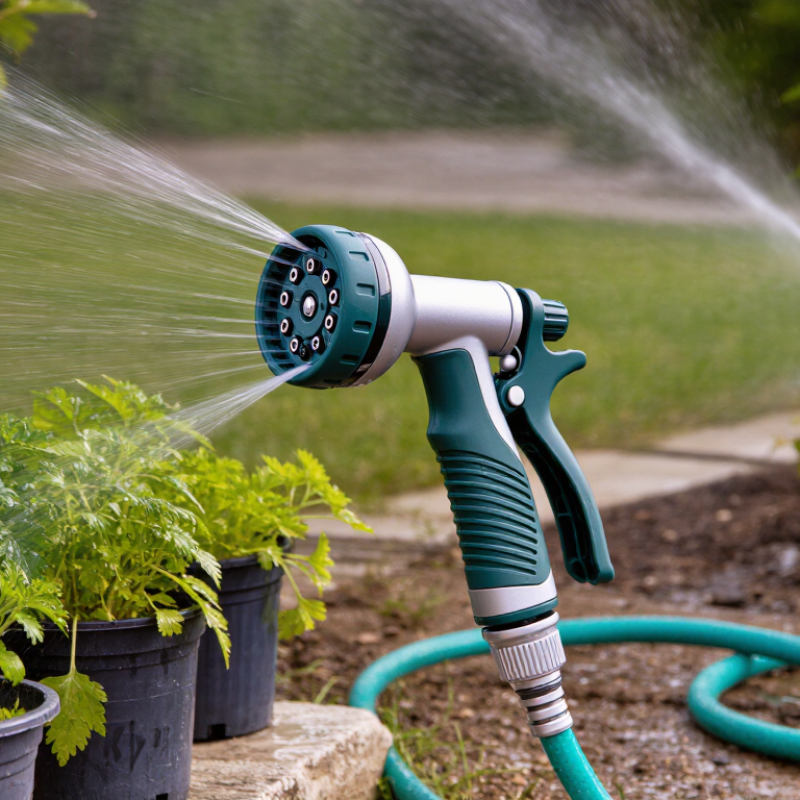
A water spray gun is a handheld tool that controls water flow from a hose. Inside, a trigger or lever opens a valve. Water then travels through the nozzle, where its shape and opening affect the spray pattern. A narrow opening creates a concentrated stream; a wider setting produces a softer fan. Simple mechanics. The gun does not create water pressure—it directs the pressure already supplied by the hose.
The nozzle’s settings can help match the spray to the task, from rinsing soil off a spade to watering a small bed. Still, a strong jet can disturb potting mix or bruise delicate leaves, so the gentlest useful setting is often better. The US Environmental Protection Agency reports that outdoor water use accounts for more than 30% of total household water use in the United States, and may reach 60% in some dry areas (EPA WaterSense, “Outdoor Water Use in the United States”). That figure is a reminder: controlling the spray matters, though a spray gun alone cannot guarantee lower water use.
Tips: Check for drips around the hose connection, and release the trigger between tasks. Test the spray on the ground first. It takes a moment, but prevents surprises.
Water spray guns in 2026 generally fall into a few practical types: pistol-grip, fan-spray, shower-pattern, jet, and adjustable multi-pattern models. Pistol grips are easy to operate for quick rinsing, though a stiff trigger can tire your hand. Fan sprays spread water across patios and garden beds. Shower patterns deliver softer coverage for seedlings and potted plants. Jet settings concentrate flow for stubborn dirt, but can disturb soil or damage delicate surfaces.
Adjustable guns combine several patterns in one tool, making them useful when watering plants and washing outdoor furniture in the same session. The U.S. EPA’s WaterSense outdoor-water-use fact sheet estimates that outdoor use accounts for about 30% of household water use nationally, while inefficient irrigation can waste significant amounts through runoff and evaporation. That figure concerns outdoor water use overall, not spray-gun performance. A nozzle alone cannot prevent waste; flow control and how long you spray matter too. Check whether the trigger locks, whether patterns change cleanly, and whether the grip feels comfortable with wet hands. Small details count. Even a broad spray can miss its target on a windy day, so the “best” type depends on the task and your watering habits.
What Is the Best Water Spray Gun in 2026?
Key Features for Comparing Spray Guns
A useful spray gun should feel controllable, not merely powerful. Compare its body material, trigger resistance, grip texture, and the effort needed to change spray patterns. A metal body may tolerate rough handling, while a lighter composite model can be easier to use for longer sessions. Check the connection and seals, too; a small leak can waste water and make the handle slippery. The best choice depends on the job, from rinsing muddy boots to watering containers.
Water use deserves attention. The U.S. Environmental Protection Agency’s WaterSense program estimates that outdoor use accounts for more than 30% of household water use on average. That makes an easy-to-operate shutoff trigger and clear flow control practical features, not extras. Compare published flow rates where available, but don’t judge a gun by maximum pressure alone. A narrow, forceful jet may damage delicate leaves or splash soil from a pot. And a comfortable grip on a shelf may feel different with wet hands; that detail is easy to overlook.
Tips: Test the trigger and pattern selector before buying. Look for a secure hose fit and a shutoff that stops flow cleanly. Small details matter.
| Spray Gun Type | Spray Patterns | Flow Control | Typical Uses | Key Advantages | Points to Check |
|---|---|---|---|---|---|
| Adjustable-pattern hose nozzle | Commonly offers several patterns, such as mist, shower, flat, cone, and jet. | Usually controlled by a trigger, dial, or both; the available adjustment varies by design. | General garden watering, rinsing outdoor surfaces, and light cleaning. | Versatile for switching between broader coverage and a more concentrated stream. | Check that the pattern selector is easy to turn and that the trigger can be operated comfortably. |
| Pistol-grip trigger nozzle | May provide one fixed pattern or several selectable patterns. | A squeeze trigger commonly starts and stops the flow; some models include a lock or flow-control dial. | Frequent watering and general-purpose hose tasks. | Trigger operation can make repeated starts and stops convenient. | Consider handle comfort, trigger tension, and whether a lock is useful for longer watering sessions. |
| Fan-spray nozzle | Produces a wide, relatively flat sheet of water. | Flow is controlled by the hose connection or an integrated valve, depending on the design. | Rinsing broad surfaces and watering rows of plants. | Covers a wider area than a narrow stream at a similar distance. | A fan pattern can be less suitable for reaching distant targets or watering a single small plant precisely. |
| Shower-pattern nozzle | Distributes water through multiple openings as a soft, broad spray. | Flow adjustment depends on the nozzle and hose setup. | Watering garden beds, containers, and plants that benefit from gentle coverage. | Spreads water over a larger area without relying on a concentrated jet. | Look for an even spray and a comfortable distance between the nozzle and the plants being watered. |
| Narrow-jet nozzle | Delivers a concentrated stream; some adjustable nozzles offer this as one of several settings. | Flow is controlled by the trigger, valve, or hose faucet, depending on the model. | Targeted rinsing and reaching specific areas. | Directs water more precisely than a broad shower or fan pattern. | Use care around delicate plants and surfaces; a narrow stream may concentrate the available water pressure. |
| Watering wand with spray head | Often provides a shower pattern; some heads offer additional settings. | May have a handle-mounted shutoff or flow control, but features vary. | Watering hanging baskets, dense planting, and areas that are difficult to reach by hand. | The extended reach can help direct water into elevated or hard-to-access areas. | Check overall length, balance, head angle, and whether the wand is easy to maneuver when connected to a hose. |
| Quick comparison checklist | Choose patterns that match the intended task rather than the largest number of settings. | Look for clearly described trigger, shutoff, and flow-adjustment functions. | Match the nozzle to watering, rinsing, or targeted cleaning needs. | Comfortable handling, useful control placement, and a suitable spray pattern matter in everyday use. | Confirm hose-connection compatibility, materials, and care instructions. A hose nozzle does not create extra water pressure; performance depends on the water supply and the nozzle design. |
| Flow rate, pressure compatibility, materials, and available spray patterns vary by model. Compare the specifications of individual products before buying. | |||||
Start with the jobs you actually do. Rinsing muddy boots needs a different spray pattern from watering delicate seedlings. A gun with adjustable settings can handle both, but extra modes are not useful if they are hard to switch. Look for a clear, sturdy selector that works with wet fingers. Test it first.
Check comfort and control. A padded or contoured handle can feel better during a long wash, while a trigger lock may reduce hand strain. Metal components often resist wear, but a well-made polymer body can be lighter and easier to hold. Neither material guarantees a longer life on its own. Inspect the trigger, joints, and hose connection for wobble or rough edges.
Water pressure matters, too. A narrow jet may clean patio grime, but it can damage fragile leaves or splash dirt onto nearby walls. Choose a model with a gentle mist and a focused spray, then adjust the flow at the tap when possible. A leaking connection is a small annoyance that gets old fast. Check that the fitting matches your hose, and store the gun out of direct sun and freezing conditions. I would not choose by the number of spray settings alone; a simple, reliable control can be the better fit for everyday use.
Care begins before the trigger is squeezed. Read the spray gun’s instructions and check that its fittings match the hose. Inspect the inlet screen, washer, and hose for grit, cracks, or drips. A worn washer can turn a tidy rinse into a persistent leak. Keep the nozzle pointed at the ground while connecting water, and never aim the spray at people, pets, or electrical equipment. Small checks matter. It is easy to skip the screen when the spray looks normal, but trapped grit can still affect the flow.
The U.S. Environmental Protection Agency’s WaterSense guidance, Outdoor Water Use in the United States, says outdoor use averages more than 30% of household water use and can reach 60% in arid regions. Close the trigger and water supply between tasks rather than leaving a running hose unattended. After use, release pressure, rinse dirt from the nozzle, and let the gun drain before storing it somewhere dry and frost-free. Check seals again if the spray pattern changes or a connection starts weeping. A quick repair is easy to postpone; that is exactly when a small leak can become routine.
Water use is calculated as flow rate multiplied by spray time: at 2, 4, 6, and 8 L/min, a five-minute session uses 10, 20, 30, and 40 liters, respectively. These are example flow rates, not product ratings. To check your spray gun, collect water in a marked container for a set time. Turn off the water when not spraying, and check the nozzle and connections for leaks.