What Is the Best Circuit Board Material for Global Buyers?

Choosing the best Circuit Board Material for global buyers is not a simple price comparison. The right choice depends on frequency, thermal load, production volume, reliability targets, and regional supply stability. A material that performs well in a laboratory may fail beside a hot motor or inside a sealed control cabinet.

Dr. John Coonrod, a longtime high-frequency PCB materials specialist, has stated, “There is no one-size-fits-all solution when it comes to PCB materials.” That principle remains practical. Standard FR-4 may suit industrial controllers, office equipment, and many consumer products. High-Tg laminates can offer better thermal endurance. PTFE-based materials may support demanding radio-frequency designs, but they usually require tighter processing control and higher budgets.

Performance is only part of the decision. Buyers should examine Dk and Df consistency, copper adhesion, moisture resistance, drilling behavior, lead times, certifications, and factory experience. Ask for test data. Check the actual laminate grade, not merely the supplier’s headline description.

Cost can mislead.

A cheaper sheet may create hidden expenses through warpage, rework, or unstable impedance. Yet premium material is not automatically better. Over-specification can waste money and complicate sourcing across countries. This is where careful engineering judgment matters. Global buyers should compare the application, the manufacturing process, and the supplier’s documented track record together. No selection is perfect. The strongest decision is the one that remains reliable after real-world testing, repeated production, and honest review of what went wrong.
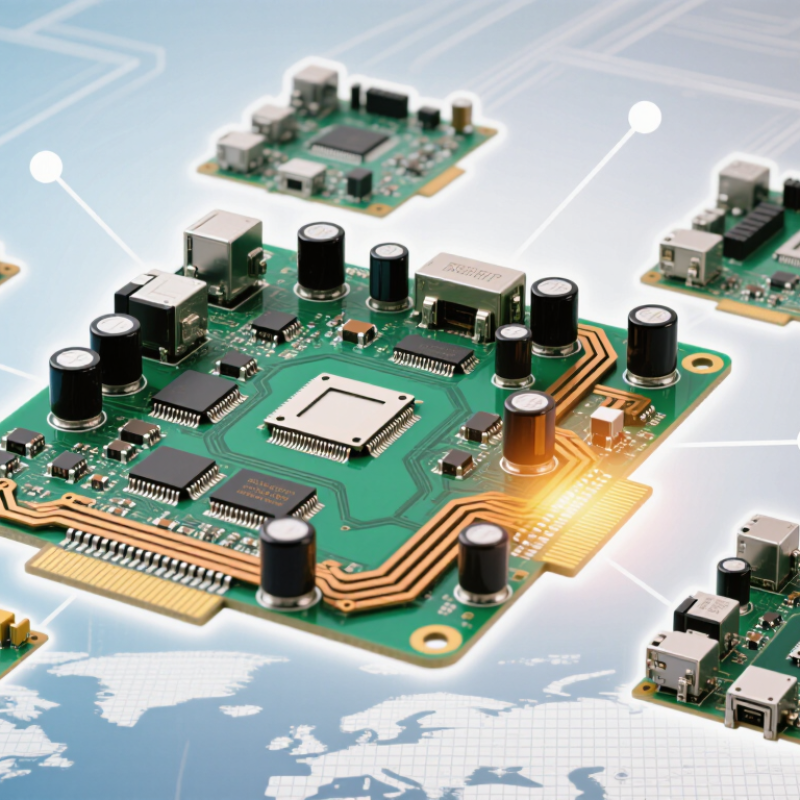
What Is the Best Circuit Board Material for Global Buyers?

What Circuit Board Materials Are and Why They Matter

What Circuit Board Materials Are and Why They Matter

A circuit board is more than a green supporting plate. It is a layered structure that carries power and signals between electronic components. Common materials include copper foil, resin, glass fiber, solder mask, and surface finishes. The insulating core controls strength and electrical behavior. Copper creates conductive paths, while glass fiber helps the board resist bending and heat.

Material selection affects reliability long after production. A high-frequency design may need low signal loss and stable dielectric performance. A power board may require strong heat management and thicker copper. In a humid environment, moisture resistance becomes important. Temperature changes can also stress plated holes and solder joints. I have seen material decisions made from price alone, only to create rework later. The cheapest sheet is not always the lowest-cost option.

Global buyers should request clear data before approving a material. Useful documents include the material datasheet, thermal ratings, dielectric values, flammability classification, and compliance records. Ask how the board performs after repeated heating cycles. Check whether the specified thickness includes copper. Small wording differences can change the final result. It is also wise to test samples under real operating conditions, including vibration, humidity, and peak load. No material is perfect. A thoughtful choice balances electrical needs, mechanical strength, manufacturing capability, and long-term risk.

How to Compare FR-4, Aluminum, Ceramic, and Flexible Materials

FR-4 remains the practical baseline for global buyers. Its typical thermal conductivity is only about 0.3–0.4 W/m·K, according to published ASTM D5470 test data. It suits digital control boards, industrial electronics, and moderate-power products. IPC-4101 defines the laminate performance requirements, but not every FR-4 grade behaves identically. Glass transition temperature, moisture absorption, and copper thickness still require verification. Cost is attractive. Heat removal is not.

Aluminum boards usually provide about 1–9 W/m·K thermal conductivity. They work well for LED lighting and compact power circuits. However, their dielectric layer can limit voltage and routing density. Ceramic materials offer much higher conductivity, often 20–170 W/m·K, based on technical data compiled for electronic substrates. They handle heat and high-frequency signals effectively, but they are brittle and expensive. Flexible polyimide materials bend around hinges and narrow spaces. IPC-2223 provides useful design guidance, though repeated bending needs real-life testing. A lab result is not always a field result.

Tips: Compare the complete system cost, not only laminate price. Request dielectric, thermal, and reliability data from at least three qualified fabricators. Check IPC-4101, IPC-2221, ASTM D5470, and your target safety requirements. Leave margin for humidity, vibration, and temperature cycling. That step is often missed.

Which Material Fits Different Applications and Performance Needs

Circuit board material is not a universal choice. It should match the application, operating environment, and production method. FR-4 remains practical for many control panels, consumer devices, and industrial electronics. It offers balanced cost, strength, and electrical stability. However, high-speed designs may need low-loss laminate to protect signal quality over longer traces. For compact products, thin materials can save space, but they may reduce mechanical rigidity. That trade-off is easy to overlook.

Tips: Define the working temperature, frequency range, layer count, and service life before requesting quotations. Ask for dielectric constant, dissipation factor, thermal expansion, and moisture data. Samples can reveal drilling quality, warpage, and soldering behavior better than a data sheet. Keep test conditions clear.

Harsh environments require closer material evaluation. Aluminum-backed boards can help remove heat in LED systems and power modules. Flexible materials suit moving assemblies, wearable devices, and tight bends. High-temperature laminates support demanding automotive, aerospace, and factory applications, but they usually increase processing costs. A material that performs well in a laboratory may behave differently after repeated heating and cooling. Global buyers should verify certification, traceability, and supplier process controls for the target market. Do not choose only by price. In my experience, the cheapest board can become expensive after rework, field failures, or delayed testing. Still, over-specifying the material wastes budget. The right decision often comes from measured requirements, not habit.

How Cost, Supply Chains, and Regional Standards Affect Material Choice

For global buyers, FR-4 is often the practical starting point. It offers stable electrical performance, broad availability, and familiar processing requirements. Prismark’s 2023 PCB industry review estimated global production at approximately US$89 billion. That scale supports competitive pricing for standard glass-epoxy laminates. However, low price can be misleading. A cheaper sheet may require longer transit, higher safety stock, or extra testing after arrival.

Supply chains change the calculation. UNCTAD’s Review of Maritime Transport reports that ships carry over 80% of global merchandise trade by volume. A port delay can therefore disrupt an otherwise efficient sourcing plan. Buyers should compare landed cost, not only the quoted laminate price. High-temperature or low-loss materials may cost more, but they can reduce redesign risks in demanding applications. Sometimes, simple FR-4 is still the wiser choice.

Regional standards also affect material selection. IPC-4101 defines important laminate requirements, while UL 94 flammability ratings support safety evaluation. European projects may require evidence related to RoHS or REACH obligations. North American customers may request different test records or certification formats. The material should match the destination market and the assembler’s process window. I have seen specifications become too complex. That creates cost without always improving reliability. A controlled sample run, supplier audit, and documented test data often reveal more than a spreadsheet. Standards matter. Local interpretation still matters more.

What Is the Best Circuit Board Material for Global Buyers? — How Cost, Supply Chains, and Regional Standards Affect Material Choice

Material Category Typical Thermal Performance Electrical Characteristics Indicative Laminate Cost* Global Supply Availability Supply-Chain Considerations Common Standards and Compliance Areas Best-Fit Applications Regional Purchasing Notes
Standard FR-4 Epoxy Glass Tg typically 130–150°C
Continuous operating temperature commonly below 130°C
Balanced dielectric performance
Dk commonly about 4.0–4.6 at 1 MHz, depending on resin content and construction
Approximately US$10–35/m² for laminate only
Varies by thickness, copper weight, and order volume
Very High Broadest availability and the largest range of approved fabricators. Usually the easiest option for multi-region sourcing. IPC-4101 material specifications
UL 94 V-0 commonly requested
RoHS and REACH restrictions may apply
General industrial controls, consumer electronics, office equipment, communications hardware, and low-to-medium thermal-load products Usually the lowest-risk choice for North American, European, and Asian production. Confirm local flammability documentation before approval.
High-Tg FR-4 Tg typically 150–180°C
Improved resistance to thermal cycling and lead-free assembly temperatures
Similar electrical behavior to standard FR-4
More stable dimensional performance at elevated temperature
Approximately US$18–55/m² for laminate only High Widely available, but resin systems and certification records vary. Qualification samples may be required when changing sources. IPC-4101
UL 94 V-0 where required
RoHS, REACH, and lead-free process compatibility
Automotive electronics, industrial power controls, servers, high-density assemblies, and products exposed to repeated heating A practical global compromise when standard FR-4 has insufficient thermal margin but advanced materials are not justified.
Halogen-Free FR-4 Tg commonly 140–175°C
Thermal performance depends strongly on the resin formulation
Electrical properties are generally comparable to FR-4, although Dk, Df, and moisture behavior differ by formulation Approximately US$20–60/m² for laminate only High More formulation-specific than conventional FR-4. Keep the same resin system qualified across approved regions when possible. IEC 61249-2-21 halogen limits are commonly referenced
RoHS and REACH
UL 94 V-0 may be required for the finished construction
Consumer products, transportation electronics, data equipment, and projects with restricted-substance or environmental requirements Frequently preferred for European and sustainability-focused programs. Verify the actual bromine and chlorine test limits rather than relying only on the term “halogen-free.”
Aluminum-Backed Metal-Core PCB High heat-spreading capability
Dielectric layer temperature rating often around 120–180°C
Usually single-layer or limited multilayer construction
Electrical performance is adequate for power and LED layouts but less flexible for high-speed routing
Approximately US$25–80/m² for core laminate materials Medium Aluminum thickness, dielectric thermal conductivity, and machining capacity can constrain supplier selection. Freight weight is higher than FR-4. IPC-4101 or applicable metal-core material specifications
UL 94 V-0 for the dielectric system where required
RoHS and REACH
LED lighting, motor drives, power converters, battery systems, and compact products requiring direct heat transfer to a chassis Often economical when heat-sink assembly costs are included. Compare total thermal-system cost rather than laminate price alone.
Polyimide Flexible Material High-temperature capability, commonly above 200°C for short-term exposure
Suitable for repeated bending when the complete stack-up is designed accordingly
Low profile and good flexibility
Dk commonly around 3.2–3.8, depending on frequency and construction
Approximately US$60–180/m² for base flexible laminate Medium to High Requires specialized flexible-circuit processing, coverlay, stiffeners, and controlled bending-radius design. IPC-4204 for flexible base materials
IPC-6013 for flexible printed boards
UL 94 and restricted-substance requirements where applicable
Wearables, cameras, medical instruments, aerospace systems, moving assemblies, and space-constrained interconnects Supply is generally available across major electronics regions, but qualification lead times are longer than for standard FR-4.
PTFE or Ceramic-Filled RF Laminate Low thermal expansion options are available
Some constructions require controlled processing because of soft resin behavior
Low and stable dielectric loss
Dk commonly ranges from approximately 2.2 to 10.0, depending on ceramic loading
Approximately US$100–350/m² for base RF laminate Medium to Low Fewer qualified material sources, tighter process controls, longer lead times, and higher minimum-order exposure are common. IPC-4103 for microwave and high-frequency materials
IPC-6018 for microwave printed boards
RoHS and REACH where applicable
Radar, satellite communications, cellular infrastructure, navigation equipment, and high-frequency test systems Use regional design and fabrication partners with verified RF test capability. Substitutions require electrical requalification because Dk and loss tolerance directly affect impedance and signal performance.
High-Frequency Low-Loss Hydrocarbon/Ceramic Material Tg commonly above 170°C
Designed for stable performance over temperature and frequency
Lower dielectric loss than ordinary FR-4
Controlled Dk values commonly in the approximate 3.0–4.0 range
Approximately US$70–220/m² for laminate only Medium Material availability is better than for some PTFE systems, but qualified sources and compatible bonding films may still be limited. IPC-4103 or relevant manufacturer material classifications
IPC-6018 for microwave boards
UL 94, RoHS, and REACH as required
High-speed networking, automotive radar, 5G infrastructure, data-center hardware, and high-frequency instrumentation Regional standards are generally less important than maintaining identical Dk, Df, copper roughness, and stack-up data across factories.
Data notes: Cost figures are indicative laminate-only ranges in 2026 US dollars per square meter; they are not purchase quotations and can change significantly with thickness, copper weight, resin content, panel size, certification, order volume, and regional freight. Tg, Dk, and temperature values are typical industry ranges rather than universal limits. Final selection should be verified against the complete stack-up, assembly profile, applicable IPC requirements, local restricted-substance rules, and the supplier’s current certificate of compliance.

How Global Buyers Can Select and Verify the Right Circuit Board Material

For global buyers, “best” means verified fit, not the highest specification. Start with heat, frequency, voltage, moisture, and production volume. A standard glass-reinforced epoxy material may suit control boards, but high-frequency designs need lower dielectric loss. Check glass-transition temperature, decomposition temperature, thermal expansion, and moisture absorption. Small differences become serious during repeated soldering.

Use recognized requirements, not supplier descriptions alone. IPC-2221 provides design guidance, while IPC-TM-650 defines test methods for electrical, thermal, and mechanical performance. Request the full material data sheet, safety documentation, certificate of conformity, and lot traceability. Ask for test coupons from the same production batch. Verify dielectric constant, dissipation factor, peel strength, and flammability under applicable standards. Do not accept “equivalent” without measured evidence. That shortcut can fail.

Sustainability also affects material choice. The Global E-waste Monitor 2024 reported 62 million tonnes of electronic waste in 2022, while only 22.3% was formally collected and recycled. Material decisions should therefore consider service life, repairability, restricted substances, and recovery options. Confirm the resin system, copper weight, halogen status, and coating chemistry. Compare samples after thermal cycling and humidity exposure. A supplier’s test report is useful, but independent verification is stronger. I would not treat one successful sample as proof. Production variation remains a practical concern.

What Is the Best Circuit Board Material for Global Buyers?

Typical dielectric constant (Dk) at 1 GHz by circuit board material family

How to interpret the chart: Lower Dk generally supports lower signal propagation delay and is often preferred for high-speed circuits. Standard and high-Tg FR-4 are widely used for general electronics, while polyimide is selected when flexibility or high-temperature performance is important. PTFE-based materials are commonly considered for high-frequency and microwave applications because of their low dielectric constant.

Verification note: These are representative industry values at 1 GHz. Actual Dk depends on resin content, glass-weave style, copper roughness, frequency, and test method. Global buyers should request the supplier's current datasheet, test method, lot traceability, and compliance documentation before approval.

Article Source: