What is an AC DC Power Supply and How Does it Work?
An AC/DC Power Supply is essential in today's technology-driven world. It converts alternating current (AC) to direct current (DC). This conversion is crucial for powering various electronic devices. Think about your phone, laptop, and even your gaming console. All rely on an AC/DC Power Supply to function properly.
How does it work? The process involves several steps. The incoming AC voltage is transformed and rectified. This action changes the current type. Filters then smooth the output to provide a steady DC voltage. Often, this whole setup seems flawless. But in reality, inefficiencies can occur. For instance, heat generation can decrease efficiency. Users may not always notice these nuances, yet they can impact device performance over time.
Understanding the AC/DC Power Supply offers insight into modern electronics. It reveals the importance of reliable power conversion in our daily lives. A deeper dive may lead to questions about what could be improved. Embracing these challenges can drive innovation and enhance technology. Acknowledging imperfections can lead to better designs in the future.
Definition and Basic Principles of AC and DC Power Supplies
AC and DC power supplies are essential in today’s electronic landscape. AC, or alternating current, is primarily used for residential and commercial applications. It changes direction periodically, which allows for efficient long-distance transmission. On the other hand, DC, or direct current, flows in a single direction. This stability is crucial for powering devices like batteries and electronic circuits.
Understanding these types begins with their definitions. AC power supplies convert electrical energy to a form needed for mainstream use. Often, they utilize transformers to adjust voltage levels. DC power supplies typically rely on rectifiers to convert AC into a usable form. This involves the extraction of the direct flow of current, smoothing out fluctuations for a steady output.
The functioning aspects could be clearer. For example, voltage levels determine how effectively devices operate. Miscalculations can lead to malfunction or damage. Additionally, the efficiency of conversions between AC and DC can vary. Identifying the right power supply is not as straightforward as it seems. Careful consideration of device requirements is crucial for optimal performance.
Components of an AC DC Power Supply: An Overview
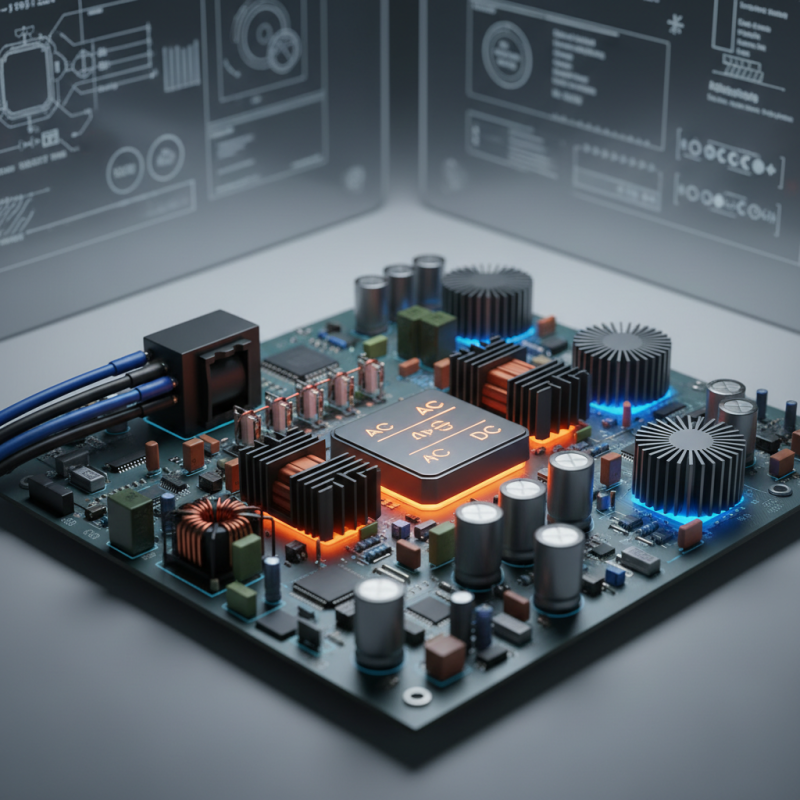
The components of an AC DC power supply play a pivotal role in its functionality. Typically, it consists of a transformer, rectifier, filter, and regulator. Each part has its unique function. The transformer steps down AC voltage for easier handling. According to the IEC (International Electrotechnical Commission), transformers can improve energy efficiency by up to 98%.
The rectifier converts AC to DC, using diodes to allow current to flow in one direction only. This process, however, can be inefficient. About 10-15% of the energy can be lost as heat. Following the rectification, the filter smooths out the pulsating DC signal. Capacitors are commonly used here. They store energy and release it gradually, ensuring a more stable output.
Regulators fine-tune the voltage to the desired level. They ensure devices receive consistent power. Fluctuations can damage electronics, leading to performance issues. Data from the IEEE (Institute of Electrical and Electronics Engineers) indicates that poor regulation can cause up to 50% of electronic failures. Each component is essential, yet the quest for efficiency raises questions about material choices and design optimization.
What is an AC DC Power Supply and How Does it Work? - Components of an AC DC Power Supply: An Overview
| Component | Function | Specifications |
| Transformer | Steps up or steps down voltage level | Input: AC Voltage, Output: Adjustable DC Voltage |
| Rectifier | Converts AC to DC | Full-Wave or Half-Wave Rectifier |
| Filter | Smoothens the output DC voltage | Capacitor-based |
| Regulator | Maintains a constant output voltage | Linear or Switching Regulator |
| Output Filter | Reduces output ripple | Inductive or Capacitive Filters |
| Protection Circuits | Prevents damage due to overvoltage or overcurrent | Fuses, Circuit Breakers, Crowbar Circuits |
How AC to DC Conversion Works: Techniques and Methods
The conversion of AC to DC involves several techniques. Most commonly, rectification is the primary method used. During this process, alternating current (AC) is transformed into direct current (DC) through diodes. These components allow current to flow in only one direction, effectively blocking the negative part of the AC waveform. Studies show that about 95% of modern power supplies utilize some form of rectification.
Another method is smoothing, which follows rectification. Capacitors are used to reduce ripples in the DC output. These components store charge and release it gradually, resulting in a more stable voltage. Reports indicate that well-designed power supplies can achieve efficiencies upwards of 90%. However, achieving high efficiency often compromises cost and size.
Tips: Always consider the load requirements when selecting a power supply. An oversized power supply may lead to inefficiency. Additionally, check for heat management in your design. Excess heat can degrade efficiency over time.
Furthermore, the choice of transformer design plays a crucial role. Transformers step down voltage but can also introduce losses due to winding resistance. According to recent findings, optimal transformer materials can significantly reduce energy loss. However, high-performance materials may not be feasible for every project.
Applications of AC DC Power Supplies in Modern Technology
AC DC power supplies are vital in modern technology. They convert alternating current (AC) to direct current (DC). This conversion is important for many devices. For instance, laptops, smartphones, and LED lights use DC power. Without this conversion, many technologies we rely on would not function.
In industrial settings, AC DC power supplies drive various equipment. They power motors, control systems, and automation units. Using these power supplies enhances efficiency. However, they can produce heat during operation. This raises questions about energy consumption and environmental impact. Life cycle assessments of power supplies reveal areas for improvement.
In the medical field, AC DC power supplies are critical. They ensure that life-support machines function smoothly. Consistent and reliable power is essential for patient safety. Yet, issues with power sources can arise unexpectedly. Ensuring quality and performance in these applications is essential. There is always room for innovation and better solutions in this area.
Common Issues and Maintenance Tips for AC DC Power Supplies
AC DC power supplies are critical in today’s electronic devices. They convert alternating current (AC) to direct current (DC), providing stable power for various applications. However, they are not without issues. Common problems include overheating, voltage fluctuations, and noise interference. Each of these issues can affect performance, leading to system failures.
Overheating is often caused by poor ventilation. It can reduce the lifespan of the power supply. Users should regularly clean dust from vents. Additionally, working in a temperature-controlled environment helps. Voltage fluctuations may arise from unstable electrical sources. Using surge protectors can mitigate these risks. Unfortunately, not everyone implements this simple protective measure.
Regular maintenance is key to ensuring optimal operation. Check for loose connections and damaged cables. A simple inspection can prevent bigger issues down the line. Keep an eye on the output voltage, too. This can reveal underlying problems. Sometimes, a power supply may need recalibration. Ignoring these steps can lead to significant performance drops or even complete failures. Remember, a little attention can go a long way.
